
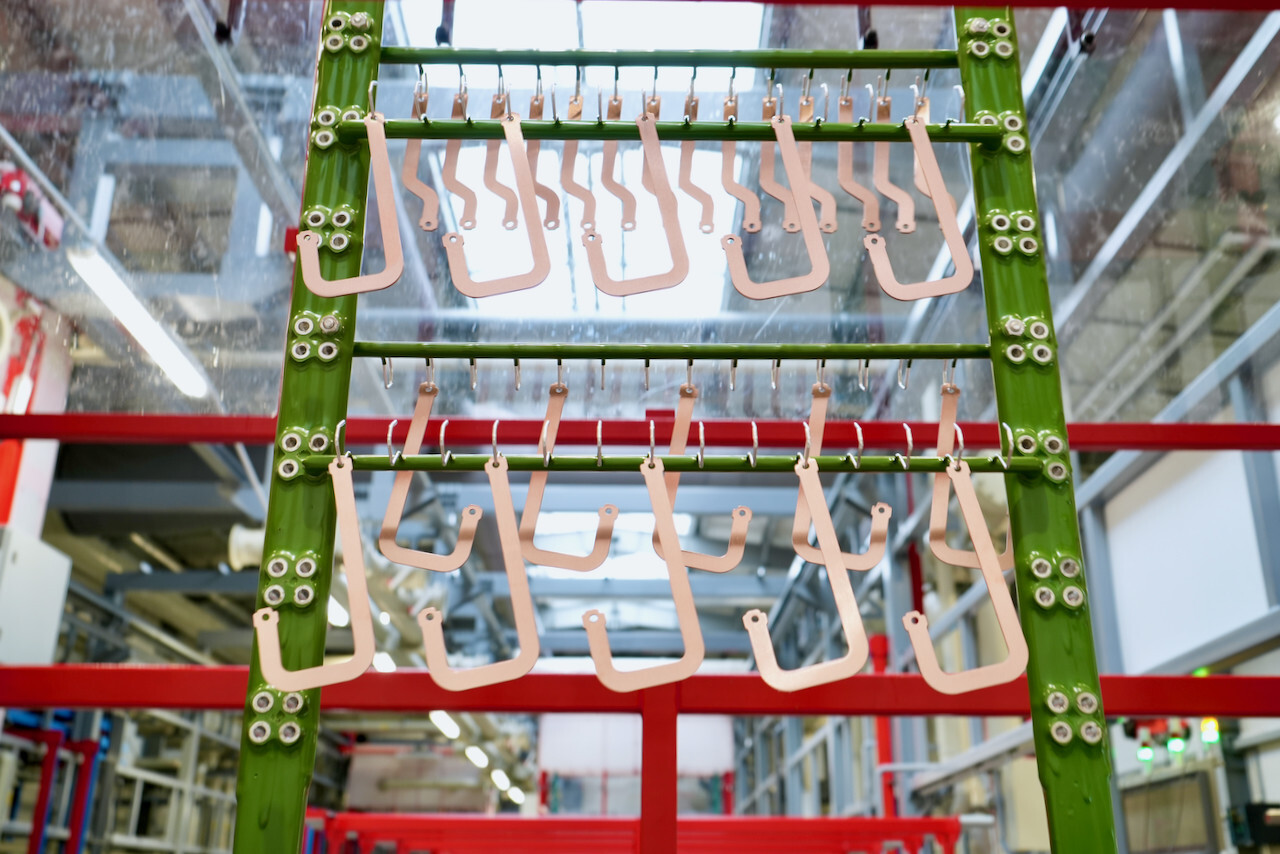
Plating on plastics brings the appearance and selected properties of metal to carefully chosen polymer components. The process is demanding because the substrate is not conductive at the start and because moulding history, resin grade, surface condition, and part geometry all influence the result.
The right response does not start with a chemical name alone. It starts with a clear description of the part, substrate, customer requirement, and process stage that needs a decision. For Plating On Plastics, connecting those inputs to the specification and the operating line gives the team a practical baseline before changing dosage, baths, or work instructions.
Technical explanation
A typical cycle prepares the moulded surface, creates microscopic anchoring, activates the part, establishes conductivity, and then builds the decorative or functional metal layers. Conventional and chrome-free etch options have different operating considerations, but both depend on controlled preparation and clean transfer between stages.
A regular review separates the symptom from the cause. The symptom may be a shift in appearance, rate, coverage, or stability; the cause may sit in preparation, loading, bath condition, rinsing, equipment, or part handling. That is why El Etehadia combines product knowledge with observation, laboratory analysis, and process support when needed.
Production considerations
Resin selection, mould release, storage, rack design, etch response, activation control, and early metal coverage are useful places to investigate when adhesion or coverage varies. Traceability by moulding batch and a disciplined sample review can reveal whether a defect began before the plating line.
Before adopting a production change, establish a reference, measure what can be measured, record operating conditions, and compare conforming and non-conforming parts. This method reduces waste, preserves learning inside the plant, and makes the corrective action traceable rather than a temporary response.
Egyptian-market context
Plastics metallization supports automotive trim, sanitary products, appliances, fittings, and consumer components made in Egypt. When production schedules are tight, local product access and technical consultation help teams evaluate the whole route—from moulded part to final finish—without treating plating as an isolated step.
“Egypt’s #1” is El Etehadia’s approved marketing positioning. It reflects our commitment to connect supply and technical support to a practical manufacturing outcome. It does not replace an assessment of the real application; it sets the level of care expected when selecting or supporting a finishing route.
Selection, validation, and follow-up
From a quality perspective, broad requests such as “better appearance” or “a more stable coating” are most useful when translated into reviewable acceptance points. These may include substrate type and condition, thickness, shade or brightness, adhesion, test outcome, and packing or storage conditions. A clearer acceptance standard makes a process and product evaluation more useful to the whole team.
Operator experience belongs in that review. Operators notice a shift in bath behaviour, foam, drying time, or part loading before the effect reaches a quality report. When those observations are recorded alongside analysis and operating data, they become knowledge that can move between shifts instead of remaining undocumented individual experience.
The supply plan should also reflect the production pattern. Consumption rate, bath volume, maintenance cycle, supporting products, and storage requirements all affect process continuity. Discussing those elements early helps align supply with operations instead of waiting for an unexpected issue at a critical moment.
Improvement is not limited to correcting defects. A structured review can identify a way to reduce drag-out, improve rinsing, make appearance more stable, or clarify work instructions. The strongest improvement therefore sets a defined trial, measures the outcome, and schedules follow-up while keeping safety and specification requirements in view.
When requesting support, prepare a short description of what changed and what remained constant, together with photographs or samples where available. That creates a focused technical conversation and increases the chance that the proposed action will be applicable to the actual line rather than a generic recommendation.
The review should also account for safety, training, and material management. Correct use of protective equipment, addition procedures, rinsing, storage, and residue handling is part of a stable process rather than a separate topic. Clear instructions and regular review help reduce variation while protecting people and product quality at the same time.
When introducing a new part or specification, it is usually better to move from a planned trial to limited production and then to full approval with defined review points. That sequence gives the factory time to observe the response before scaling it and protects schedules and customer confidence from an unmeasured change.
El Etehadia works with manufacturing teams to provide the appropriate product and connect that supply to process context. Start with the application conversation, and ask for technical support whenever observation, analysis, or line data need a clear practical interpretation.
Ultimately, a sound technical decision is one that can be explained, implemented, and checked for effect. Assign ownership for each step, review the available bath data, samples, specification, and production record, then set a follow-up date. This makes the outcome part of a continuing operating system rather than an isolated reaction to a complaint or supply request. It also gives quality, production, and purchasing teams a shared language for faster, clearer decisions while retaining useful evidence when the part repeats, conditions change, or a customer asks for proof of process consistency.
Why El Etehadia
- Conventional, direct-metallization, and chrome-free-etch process support.
- Links between plastic substrate review and the complete metallization cycle.
- Local technical service for adhesion, coverage, and visual-finish investigations.
Frequently asked questions
Can every plastic be plated?
No. The resin, filler, moulding condition, and required finish determine whether and how a part can be metallized.
What causes plating to peel from plastic?
Common contributors include unsuitable resin, mould-release contamination, poor etch response, incomplete activation, and process carry-over.